Token & Certificate
Shioaji uses API Key as the login method. Please follow the steps below to apply.
API Key
Apply The API Key
-
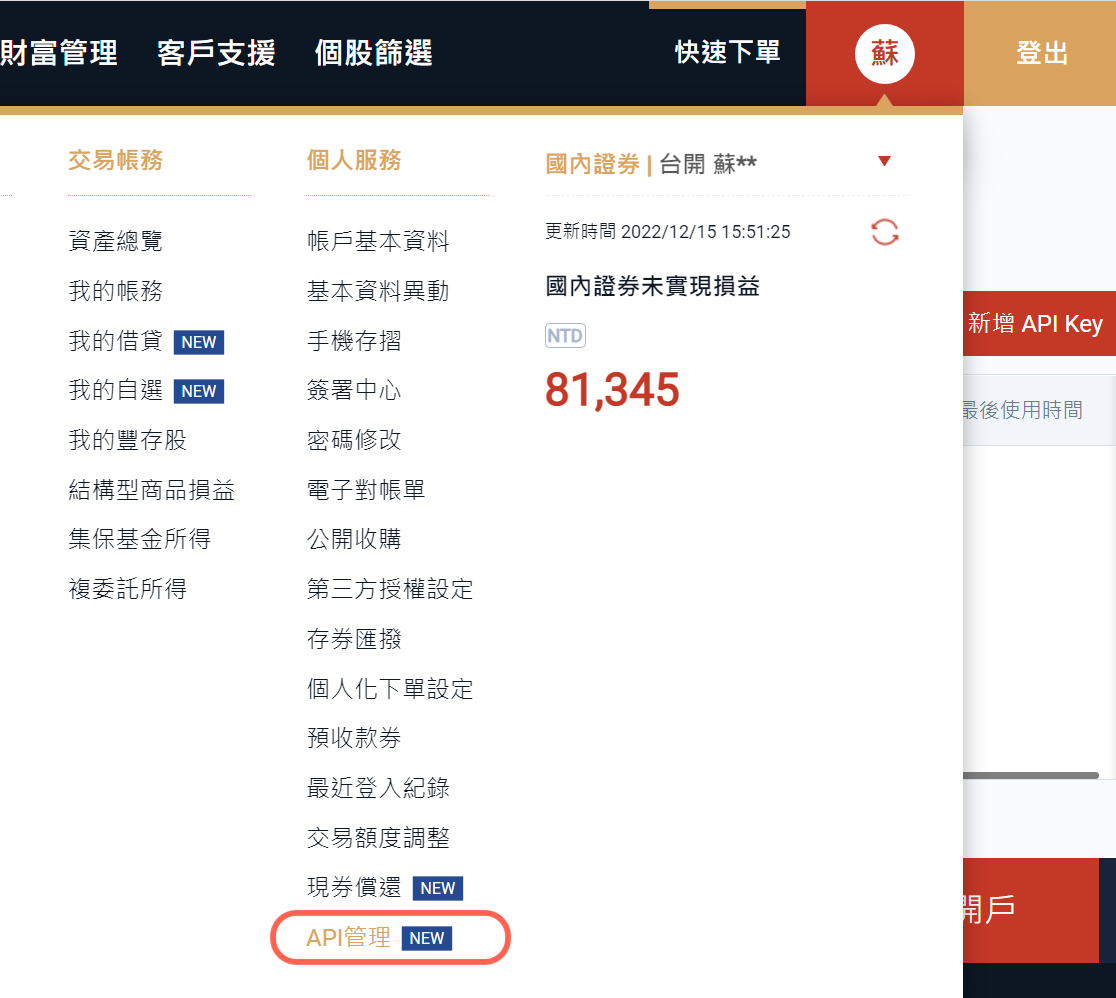
Go to the API management page in the personal service.
-
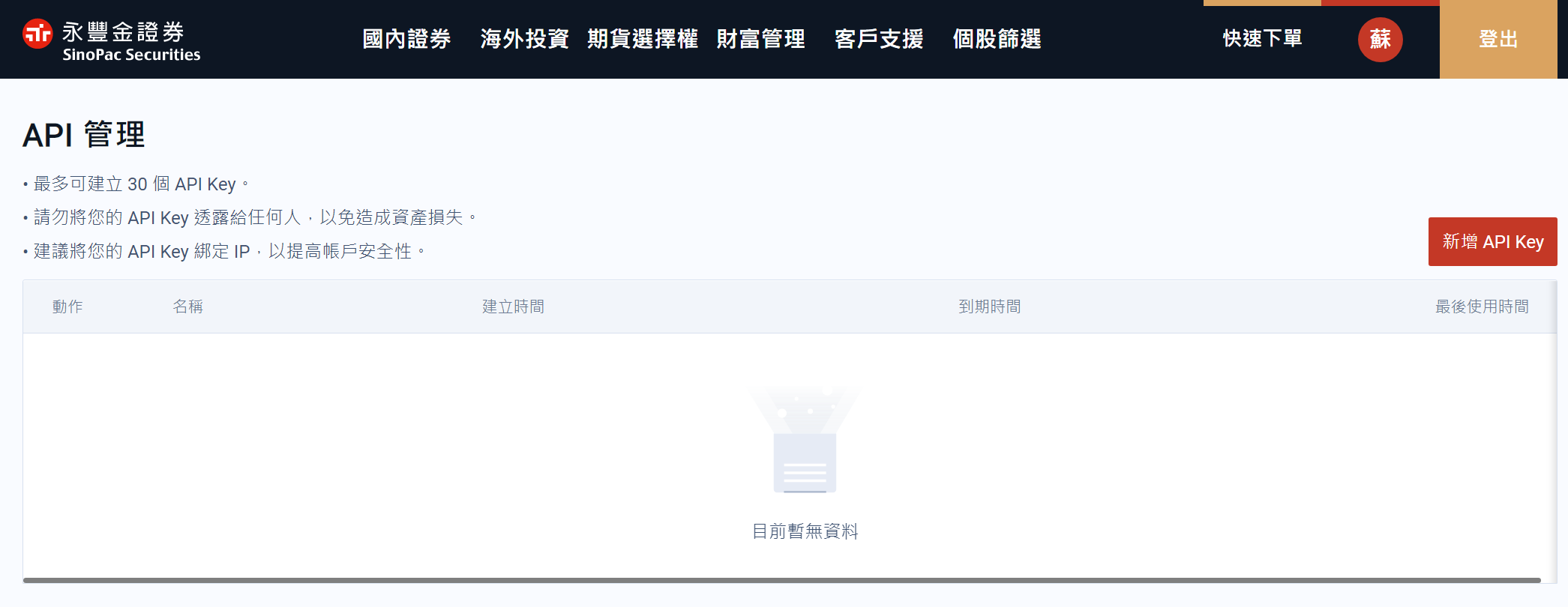
Click Add API KEY.
-
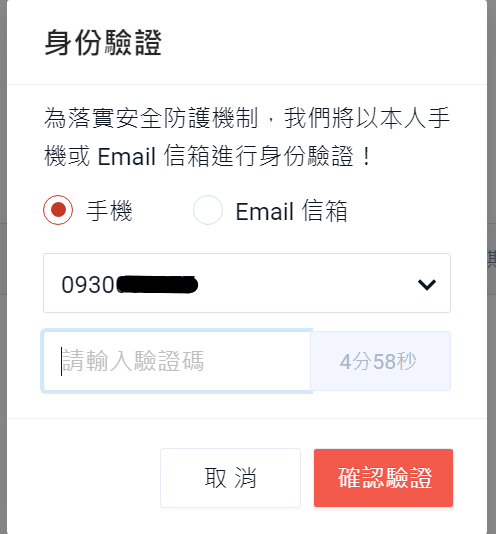
Use your mobile phone or email to do two-factor authentication, and the API KEY can only be established if the verification is successful.
-
You can set expiration time, permission, which account can be used, whether it can be used in the production environment and allowed IP list of the key.
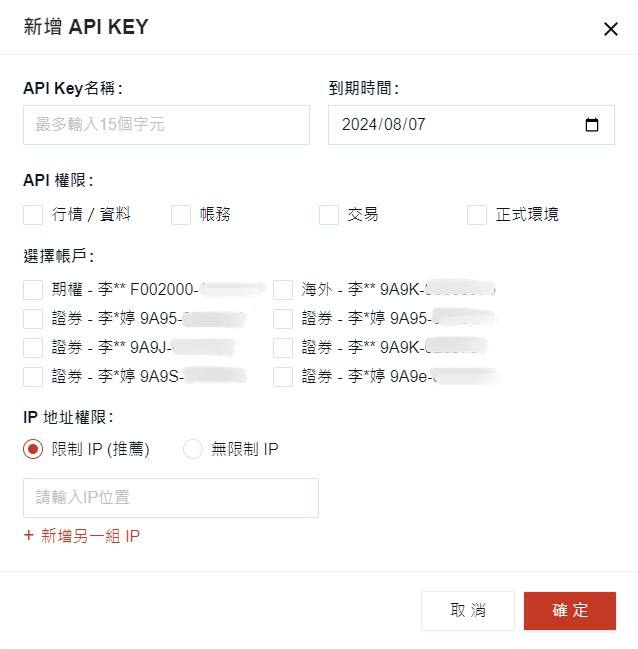
Permission Description
- Market / Data : Whether to use the market / data related API
- Account : Whether to use the account related API
- Trading : Whether to use the trading related API
- Production Environment : Whether to use in the production environment
Attention
It is recommended to limit the use of IP, which can improve the security of the KEY.
-
If you add successfully, you will get the API Key and Secret Key.
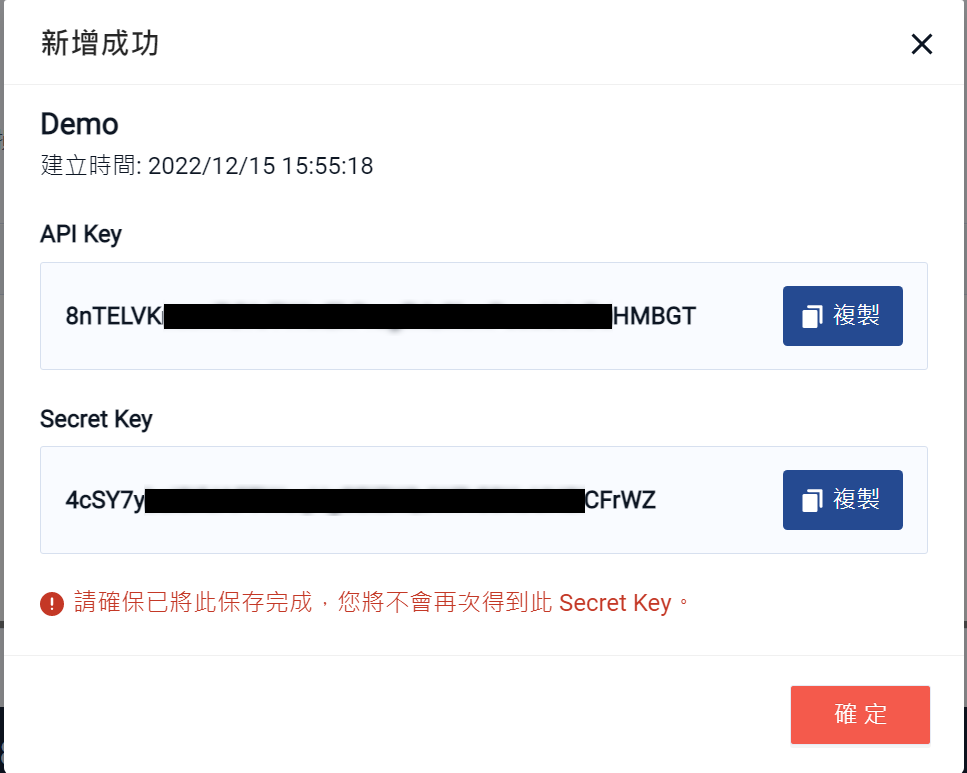
Attention
-
Please keep your key properly and do not disclose it to anyone to avoid property loss.
-
The Secret Key is only obtained when the establishment is successful, and there is no way to obtain it after that, please make sure to save it.
-
Certificate
Download Certificate
- Go to the API management page and click the Download Certificate button.
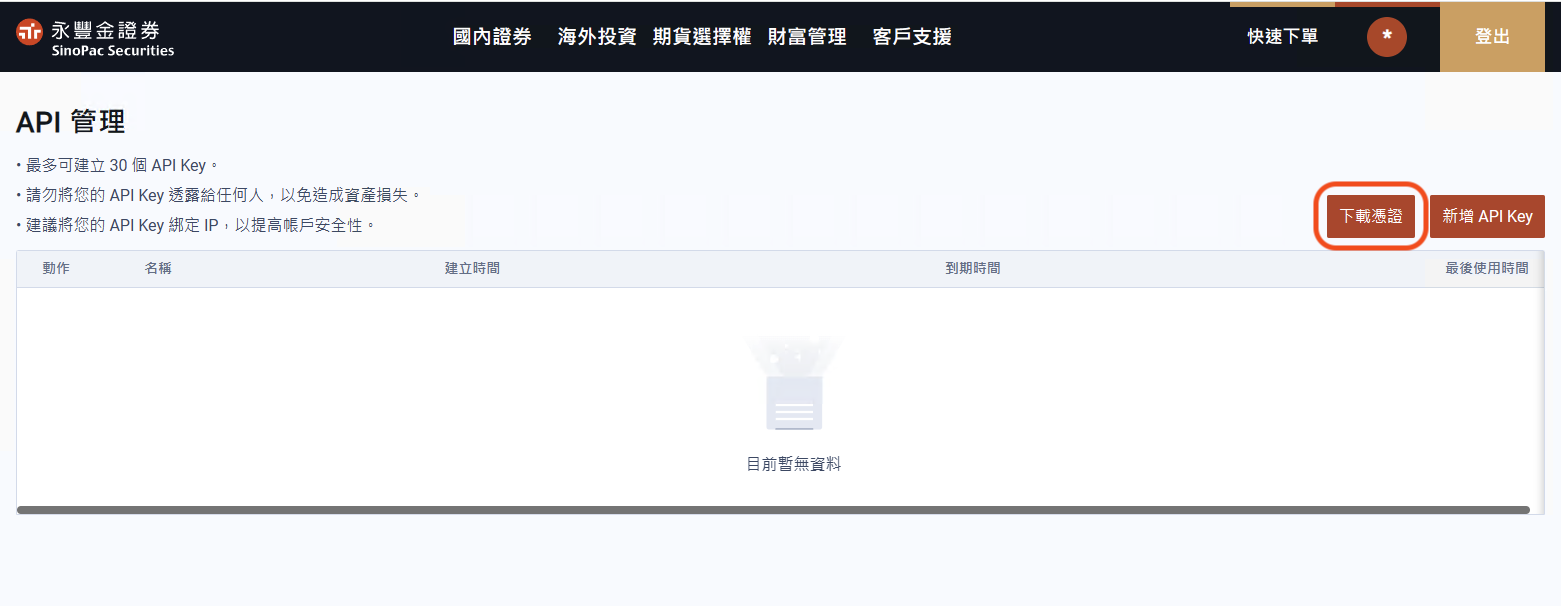
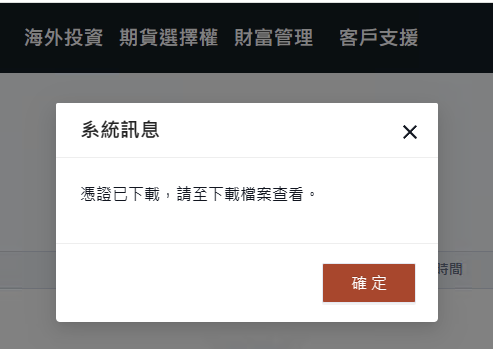
- Download the certificate and place it into the folder that the API can read.
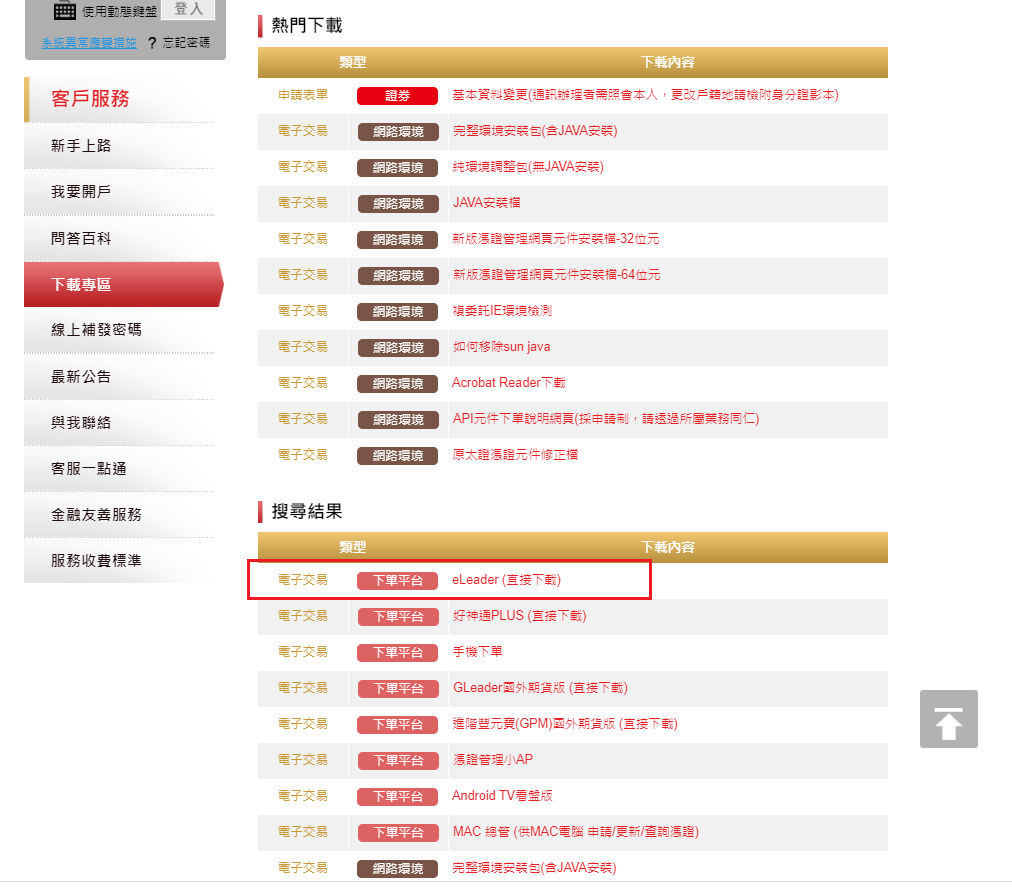
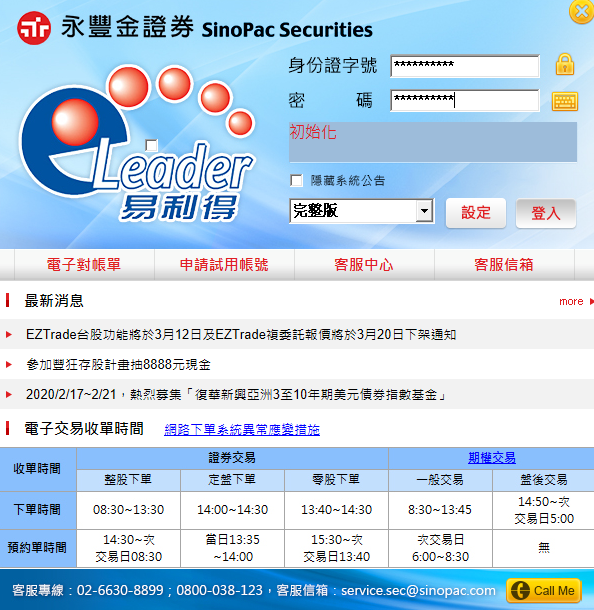
- Go to SinoTrade and download eleader.
- Log in to eleader.
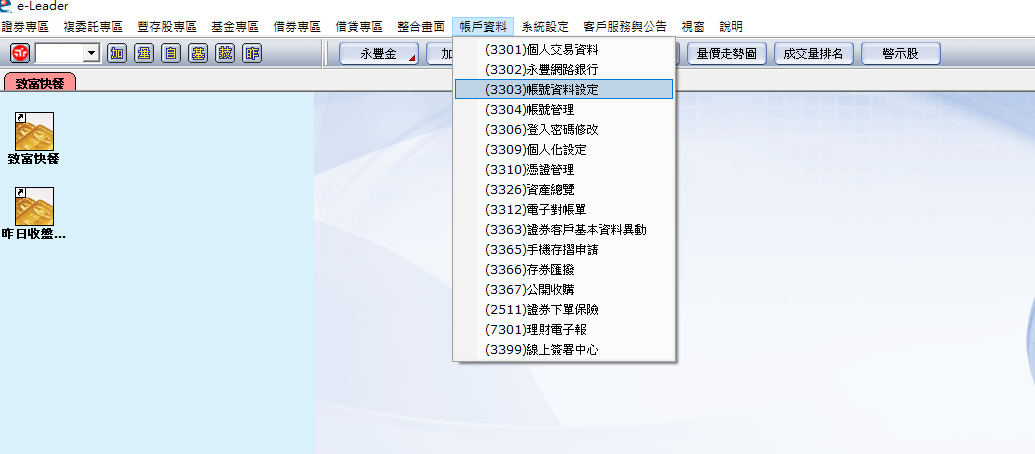
- From the account info menu, select (3303) account info settings.
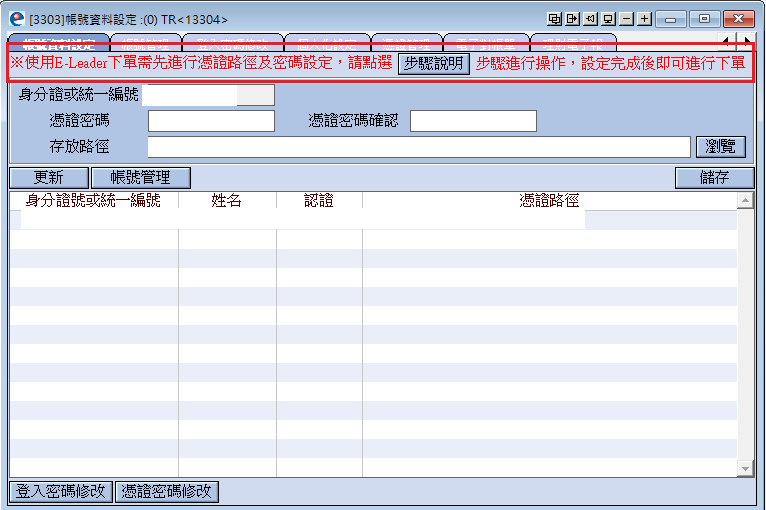
- Click "Step Instructions".
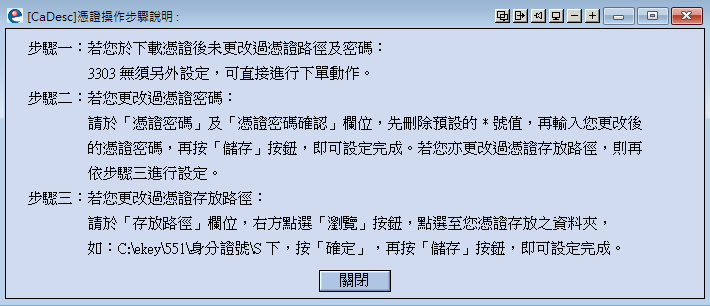
- Follow the certificate operation steps.
Confirm The API Key And Certificate
Create a .env file at your Python project root (next to pyproject.toml) with the following content:
SJ_API_KEY=<API Key from above>
SJ_SEC_KEY=<Secret Key from above>
SJ_CA_PATH=<CA Certificate Path>
SJ_CA_PASSWD=<CA Certificate Password>
The project folder structure should be like this:
your-project
├── README.md
├── .env
├── pyproject.toml
├── src
│   └── your_package
│       └─ __init__.py
└── uv.lock
Add the python-dotenv package to load the key and certificate into environment variables:
uv add python-dotenv
Add the following content into src/your_package/__init__.py:
import os
from dotenv import load_dotenv

load_dotenv()

def main():
    api = sj.Shioaji(simulation=True)
    api.login(
        api_key=os.environ["SJ_API_KEY"],
        secret_key=os.environ["SJ_SEC_KEY"],
    )
    api.activate_ca(
        ca_path=os.environ["SJ_CA_PATH"],
        ca_passwd=os.environ["SJ_CA_PASSWD"],
    )
    print("login and activate ca success")
Add the main command into pyproject.toml:
[project.scripts]
main = "your_package:main"
Run the main command:
uv run main
If you see login and activate ca success, it means you have successfully logged in to the simulation environment.
Create a .env file under the directory where you will run shioaji server start, with the following content:
SJ_API_KEY=<API Key from above>
SJ_SEC_KEY=<Secret Key from above>
SJ_CA_PATH=<CA Certificate Path>
SJ_CA_PASSWD=<CA Certificate Password>
Start the server; it will automatically read .env to complete login and CA activation:
shioaji server start
Check status:
shioaji server check
On success, it will display the simulation mode and the logged-in account information.
Activate CA
You must activate your CA before placing orders. If you only use simulation mode, you can skip this section.
Call api.activate_ca() to load and activate the CA:
result = api.activate_ca(
    ca_path="/path/to/your/Sinopac.pfx",
    ca_passwd="YOUR_CA_PASSWORD",
    person_id="YOUR_PERSON_ID",
)
print(result)
# True
Windows Path
On Windows, replace path backslashes \ with forward slashes / or double backslashes \\.
Check CA expiry time:
api.get_ca_expiretime("YOUR_PERSON_ID")
shioaji server start automatically reads SJ_CA_PATH and SJ_CA_PASSWD from .env to activate the CA; no extra call is needed.
Check CA expiry time with the CLI:
shioaji auth ca-expiretime --person-id YOUR_PERSON_ID
Response:
person_id: YOUR_PERSON_ID
expire_time: 2026-09-13T15:59:59
Or via HTTP:
curl "http://localhost:8080/api/v1/auth/ca_expiretime?person_id=YOUR_PERSON_ID"
Response:
{"person_id":"YOUR_PERSON_ID","expire_time":"2026-09-13T15:59:59"}
Next, if you have not yet completed the API usage signature, please proceed to the next chapter to complete the signature and pass the audit for the API.